
Chicken Problems
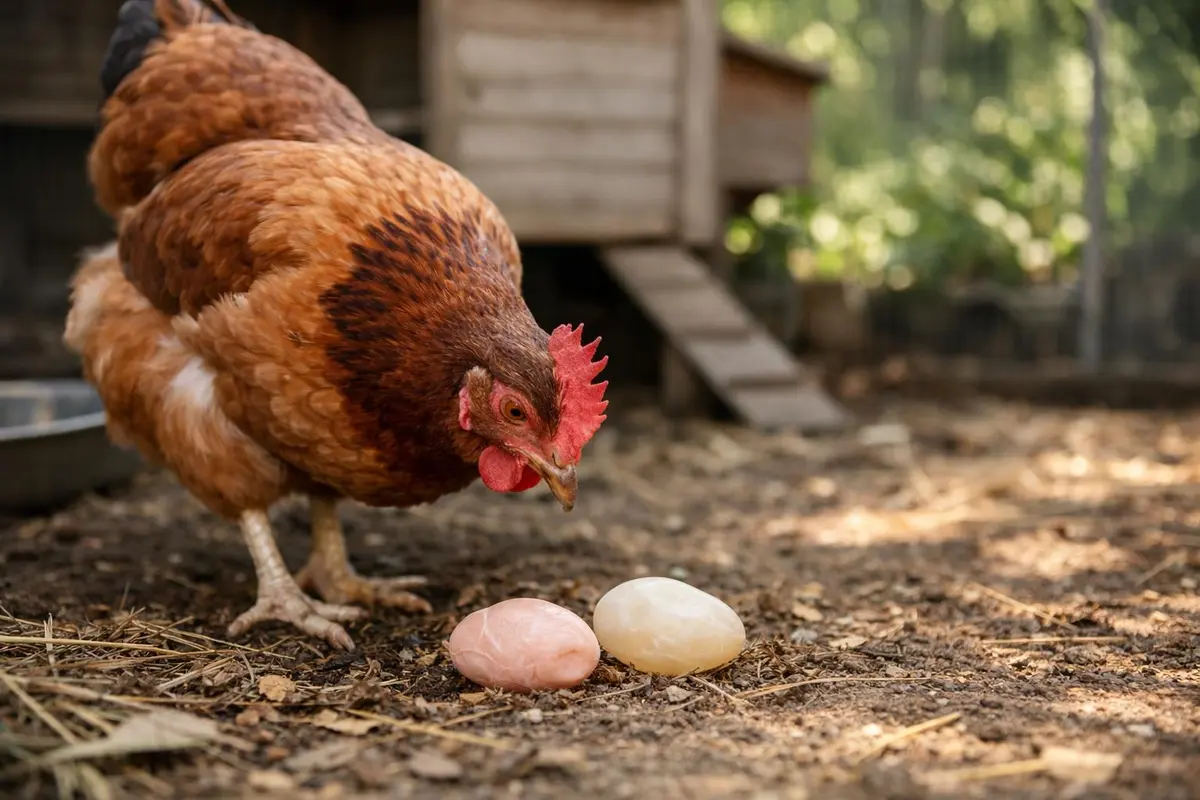
Why Is My Chicken Laying Soft-Shell Eggs?
Why backyard hens lay soft-shell or shell-less eggs, what to check today, and when the safer move is to call a poultry vet.
- Reviewed
- by Raising Chickens editorial team
- Sources
- 4 sources
- Level
- beginner
2 min read
At a glance
- One egg
- Often monitor
- Repeated eggs
- Investigate
- Calcium support
- Free-choice
A single odd egg from a new layer can happen.
Track whether it is one hen or several.
Offer oyster shell separately from feed.
Soft-Shell Egg Pattern Check
Start with the pattern. It helps you decide whether to adjust management, watch closely, or ask for veterinary help.
| Item | Practical rule | Note |
|---|---|---|
| One new layer, one egg | Monitor for a few days | Pullets can lay odd first eggs while the system matures. |
| Several hens, hot week | Review heat stress support | Add shade, cool water, and ventilation. |
| Same hen repeatedly | Separate observations and consider vet advice | Track appetite, posture, droppings, and laying behavior. |
| Weak, hunched, straining bird | Call a poultry vet | Do not wait if the hen looks unwell. |
Possible Causes #
- Calcium availability: The feed may not be a layer ration, oyster shell may be missing, or lower-ranking hens may not reach the supplement.
- Vitamin D3 or mineral balance: Calcium only helps when the bird can use it properly.
- Heat stress: Panting and reduced feed intake during hot weather can affect shell formation.
- Young hens: Pullets just starting to lay sometimes produce soft, tiny, or oddly shaped eggs.
- Older hens: Shell quality commonly declines with age.
- Sudden stress: Predator scares, moves, lighting changes, or flock fights can interrupt the laying cycle.
- Disease: Some respiratory and reproductive diseases can affect shell quality.
What To Check Today #
- Is oyster shell offered free-choice in a separate dish?
- Is the main feed a layer ration for laying hens?
- Is the soft egg from one hen or several hens?
- Has there been recent heat, fright, new birds, or a coop move?
- Is any hen weak, hunched, off feed, straining, wheezing, or separated from the flock?
What You Can Do Safely #
- Offer oyster shell free-choice in a separate container.
- Confirm the flock is eating a complete layer feed rather than grower feed or scratch-heavy scraps. The chicken feed calculator can show whether the daily feed amount is actually reaching the birds, or whether treats and scraps have crowded out the layer ration.
- Add shade, ventilation, and cool water during hot weather.
- Reduce stressors such as loose dogs, overcrowding, or abrupt routine changes. Walking the predator-proof coop checklist at dusk also catches the kind of nighttime scares that interrupt laying for days.
- Track eggs for one week with notes on date, shell quality, weather, and likely hen.
Seven-Day Egg Quality Log
- OK Record each soft-shell egg with the date and likely hen.
- OK Note the day's temperature and any major stress event.
- OK Check whether oyster shell is still available at evening lockup.
- OK Watch the suspected hen eat, drink, move, and roost.
- OK Save photos if you need to ask a vet or extension office for help.
Prevention Tips #
Keep oyster shell available year-round, separate from feed. In summer, make shade and fresh water boringly reliable. Do not let scratch, scraps, or garden treats crowd out the layer ration. Older hens may lay more odd eggs, so track the flock you have instead of chasing one perfect egg standard.
FAQ
Is one soft-shell egg an emergency?
Usually no. A single soft-shell egg from a hen who otherwise acts normal, especially a new layer or during a hot week, is usually something to monitor.
Should I crush eggshells and feed them back?
You can, but oyster shell is more reliable. Eggshells must be clean, dry, and crushed so they do not encourage egg eating.
Can I mix calcium into the feed?
It is better to offer oyster shell separately. Roosters, chicks, and non-laying birds should not be forced to eat high-calcium layer supplements.
References
Sources used
4 visible sources
Eggshell problems can have nutritional, environmental, age-related, or disease causes, so sources include poultry extension and veterinary references.
- Eggshell Quality in Laying Hens
Poultry Extension
Summarizes common factors that affect shell strength and quality.
- Calcium Metabolism Problems in Hens
Merck Veterinary Manual
Veterinary background on calcium-related laying problems.
- Nutritional Requirements of Poultry
Merck Veterinary Manual
Supports calcium, phosphorus, and vitamin D context for laying hens.
- Raising Chickens for Eggs
University of Minnesota Extension
Backyard-flock guidance on layer diet, oyster shell, and health observation.
Reviewed by Raising Chickens editorial team
Raising Chickens publishes practical, source-backed guidance for backyard chicken keepers and gardeners. See our editorial guidelines.
Last reviewed .
Related Guides
- Chicken Feed Calculator
Estimate how much feed your flock will eat over days, weeks, or a month, with optional bag count and cost.