
Coop & Run
Predator-Proof Coop Checklist
A backyard coop predator-proofing checklist covering hardware cloth, latches, aprons, roof gaps, and the weak spots people miss.
- Reviewed
- by Raising Chickens editorial team
- Sources
- 3 sources
- Level
- beginner
2 min read
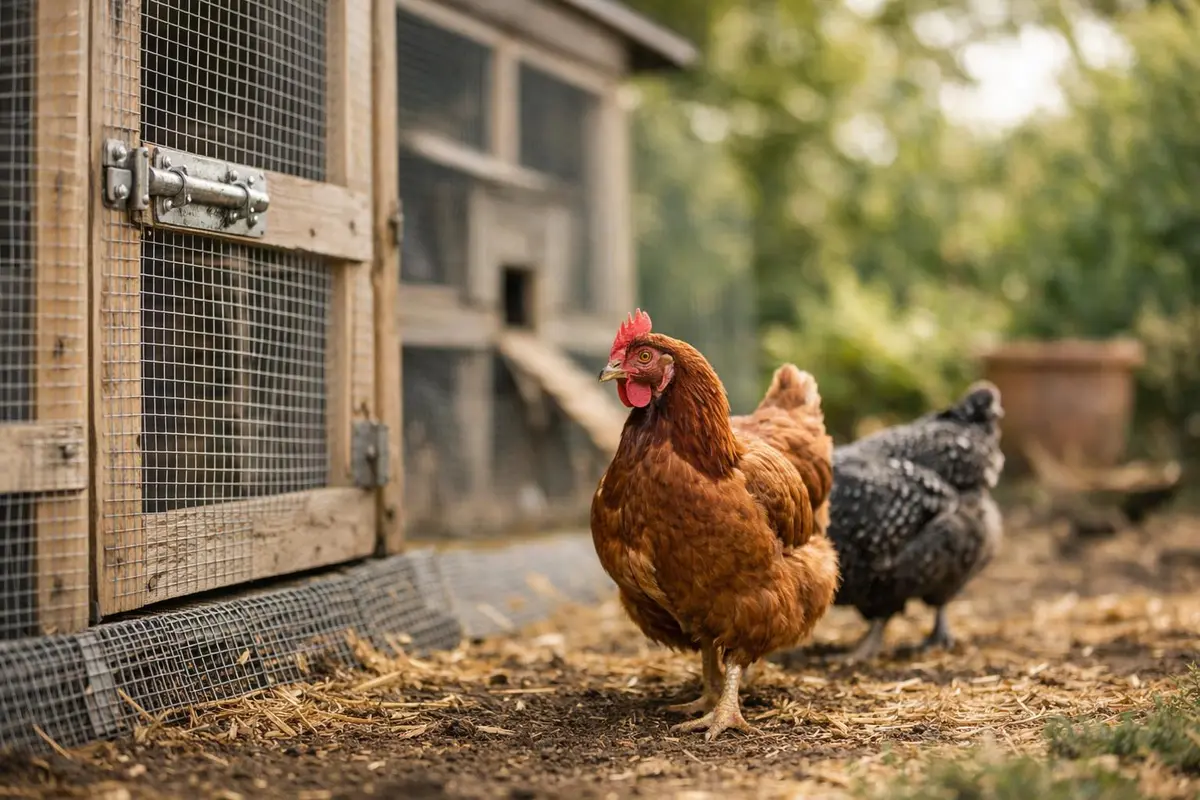
At a glance
- Wire
- 1/2 in cloth
- Dig barrier
- 12-24 in
- Latch
- Two-step
Chicken wire is not a predator barrier.
Use a buried skirt or flat apron.
Use latches that cannot be flipped open easily.
Predator Barrier Choices
A safe coop usually fails at the weakest detail, not the biggest wall. Use this table during a dusk walkaround.
| Item | Practical rule | Note |
|---|---|---|
| Chicken wire | Use only to keep chickens in | It is easy for many predators to tear or reach through. |
| 1/2-inch hardware cloth | Use on windows, vents, doors, and run sides | Fasten with screws and washers or fender strips. |
| Flat apron | Extend 18-24 inches outward | Pin to the ground and let grass grow through it. |
| Buried skirt | Bury about 12 inches down | Neater look, more digging during installation. |
Why Hardware Cloth Matters #
Chicken wire keeps chickens in. It does a poor job keeping predators out. Hardware cloth is stiffer, with smaller openings, so it belongs on vents, windows, doors, and the lower run wall. Fasteners matter too. Staples alone can loosen; screws with washers or wood battens hold the cloth tight against the frame. Before you buy materials, size the coop and run with the chicken coop size calculator. A cramped coop is harder to secure because every vent and access panel sits closer to the birds.
Coop Checklist #
- Cover all vents and windows with hardware cloth.
- Secure the pop door with a two-step latch such as a bolt plus carabiner.
- Close any gap over 1/2 inch around roof lines, corners, and doors.
- Protect the floor from digging with a solid floor, buried skirt, or apron.
- Check roof edges, loose flashing, and soffits from inside the coop.
Dusk Lockup Walkaround
Do this with a flashlight. Most weak points show up only when you crouch, look upward, or tug on the frame.
- OK Tug every latch and gate as if you are trying to open it with one hand.
- OK Look for daylight around doors, roof lines, and vent frames.
- OK Check that hardware cloth edges are covered or fastened every few inches.
- OK Walk the apron edge for new digging, loose staples, or lifted corners.
- OK Remove buckets, lumber, and stacked objects that create a climbing ramp.
Run Checklist #
- Cover the run roof with wire, solid roofing, or a strong netting system suited to your local predators.
- Extend an apron outward from the base or bury a skirt below the run wall.
- Use gate latches as strong as the coop door latch.
- Keep feed stored in sealed containers so the run does not attract rodents. The chicken feed calculator can help you buy amounts that fit your storage instead of leaving half-open bags around.
- Trim vegetation enough to see holes, digging, and wire damage.
Common Mistakes #
- Trusting chicken wire because it holds the birds in.
- Using single-action latches that can be bumped or flipped.
- Leaving open soffits or roof gaps because they look too high to matter.
- Forgetting that small snakes, rats, and weasel-sized animals use very small holes.
What To Do Next #
Walk your coop and run at dusk with a flashlight. Get low. Look up. Pull on the wire. Any spot that flexes, rattles, or shows daylight belongs on the fix list.
FAQ
Is hardware cloth required, or just nicer?
For predator protection, use hardware cloth on openings. Chicken wire can contain chickens, but it is not a strong predator barrier.
Do I need to bury the apron, or can I lay it flat?
A flat apron can work if it extends outward and is pinned down well. Burying looks cleaner but takes more labor.
Are electric fences worth it?
They can add a useful layer for ground predators, but they should support physical barriers rather than replace them.
References
Sources used
3 visible sources
Predator risks vary by region. These recommendations focus on physical barriers and daily checks that apply to most backyard coops.
- Predators and Your Poultry
Poultry Extension
Poultry-specific overview of common predator pressure and prevention.
- Housing Design for Small and Backyard Poultry Flocks
Poultry Extension
Supports safe construction, maintenance access, and injury prevention.
- Urban Poultry
Poultry Extension
Adds backyard-flock context for housing, rules, and keeping birds contained.
Reviewed by Raising Chickens editorial team
Raising Chickens publishes practical, source-backed guidance for backyard chicken keepers and gardeners. See our editorial guidelines.
Last reviewed .
Related Guides
- Chicken Coop Size Calculator
Estimate coop square footage, run space, roost length, and nesting boxes for your flock based on bird size and management style.